This is the Modelplane blog. It is open source: posts live in the repository as Markdown, and anyone can propose one through a pull request. When a maintainer merges your PR, your post goes live.
This first post doubles as a reference. It shows every building block you can use so you can copy what you need into your own draft.
Writing in MDX
Posts are written in MDX, which is Markdown plus a small set of safe
components. Everything ordinary Markdown does works here: bold, italic,
inline code, links, lists, and quotes.
The control plane reconciles desired state against the real fleet, continuously, without a human in the loop.
- Run any model on infrastructure you own
- Cloud, neocloud, or on-premise
- One control plane across all of it
Code blocks
Fenced code blocks are syntax highlighted at build time, with optional titles and line highlighting:
def reconcile(desired, observed):
    for workload in desired:
        if workload not in observed:
            schedule(workload)  # bring the fleet toward desired state
    return observed
Callouts
Use callouts to draw attention to a note, tip, or warning.
Co-locate post images and video under public/blog/<slug>/ and
reference them with absolute paths.
Open a draft PR to get a Vercel preview URL, then share it for review before the post is published.
Only the components documented in the contributor guide are available. Unknown tags will fail the build.
Images
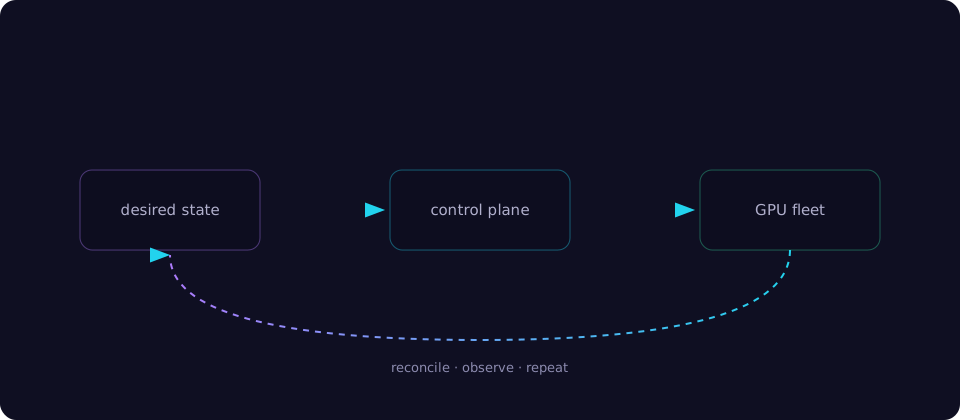
Standard Markdown images render as captioned figures. The alt text becomes the caption:
Tables
GitHub-flavored tables are supported:
| Provider | Type | Status |
|---|---|---|
| AWS | Cloud | Supported |
| CoreWeave | Neocloud | Supported |
| On-prem | Owned | Supported |
Video and embeds
Embed a YouTube video with the <YouTube> component:
For self-hosted clips use <Video src="/blog/your-slug/demo.mp4" />, and for
other providers use <Embed src="https://..." />.
That is the whole toolkit. Copy this file, change the frontmatter, and start writing. See the contributor guide for the full reference.